Skip to product information
1 of 2

Mimaki

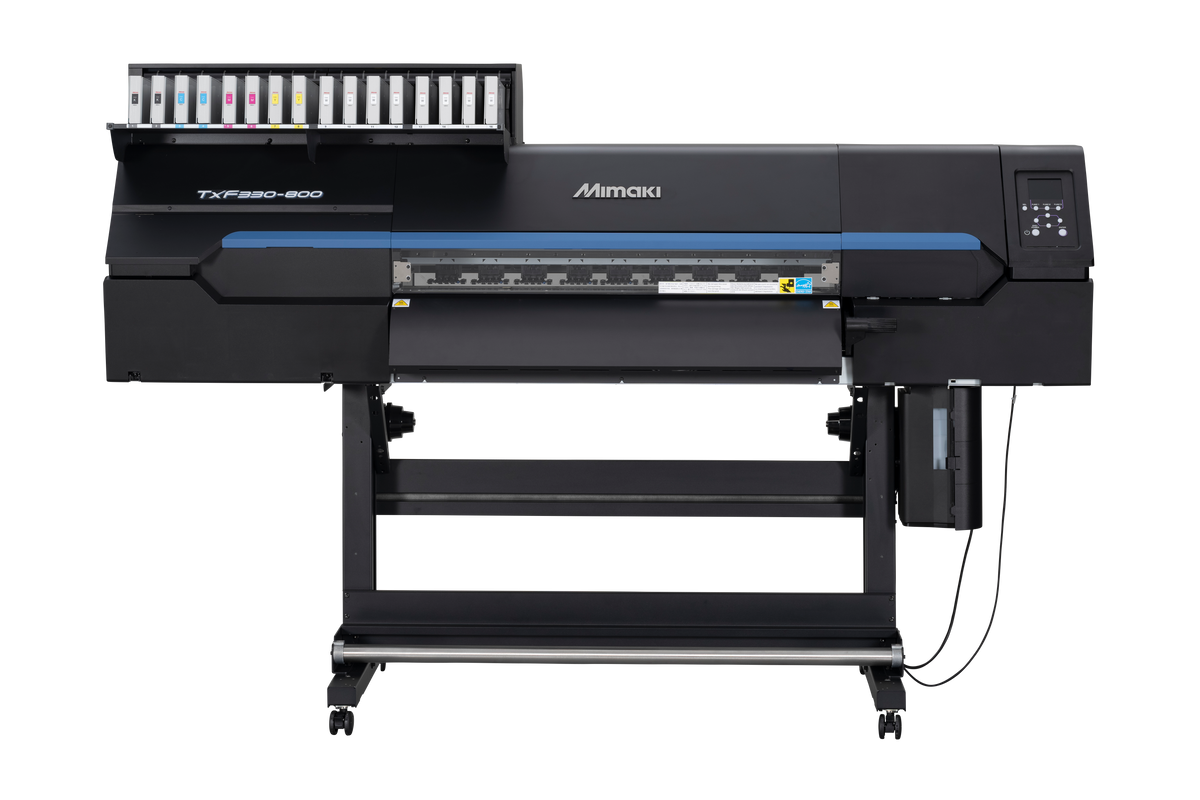
Mimaki TXF330-800

Mimaki TXF330-800

Regular price $17,995.00
Regular price Sale price $17,995.00
Sale Sold out
Shipping calculated at checkout.
Number of Colors

The Mimaki TxF330-800 DTF Printer is the next evolution in professional direct-to-film production—engineered for speed, color precision, and reduced operator intervention. Designed for high-output print shops, this advanced DTF system delivers expanded color gamut options (4-color or 6-color), a wide 34” print format, and up to 50% faster production speeds than previous models, helping you scale without sacrificing quality. With Mimaki’s proven reliability and automated maintenance technology, the TxF330-800 keeps your presses running and your profits growing.

Key Benefits

  • Print More, Faster – Achieve up to 50% faster output vs. TxF300, increasing daily production capacity and revenue potential
  • Expanded Color Gamut Options – Choose 4-color or 6-color configurations for richer gradients, deeper blacks, and more vibrant prints
  • Maximize Production Width – The 34” print width allows for larger gang sheets and better material efficiency
  • Less Maintenance, More Uptime – Advanced automated maintenance and white ink management reduce downtime and operator intervention
  • Consistent, High-Quality Output – Precision printheads and stable ink delivery produce sharp detail, smooth gradients, and repeatable results across runs

The Mimaki TxF330-800 is built for serious DTF production environments—including high-volume print shops, contract decorators, and growing apparel brands looking to scale efficiently. It’s ideal for businesses producing transfers for t-shirts, hoodies, workwear, and specialty textiles, offering a streamlined workflow from print to powder to press. Whether you're upgrading from entry-level DTF or replacing older systems, this printer is designed to increase throughput, reduce labor, and deliver consistent, retail-quality transfers at scale.

View full details
  • Need Assistance with Mimaki Products?

    Our team is committed to your success and satisfaction. We are passionate about helping the printing community through knowledge, education, and service. Need additional information on our products, contact us today and we will be happy to assist!

Frequently Asked Questions

Where is Blue Ridge Screen Products located?

Blue Ridge Screen Products is located in Charlotte, North Carolina. Our facility includes a showroom, warehouse, equipment demonstration area, and service support for screen printing and digital printing businesses.

Visit our contact page for our address, business hours, and directions.

Does Blue Ridge stock replacement parts and consumables?

Yes. Blue Ridge stocks a wide range of inks, films, powders, emulsions, chemicals, maintenance supplies, and replacement parts for many of the equipment brands we sell.

Browse our screen printing suppliesdigital printing supplies, or contact technical service for help locating a specific part.

Can I pick up my order from Blue Ridge Screen Products?

Yes, local pickup is available for eligible orders from our Charlotte, North Carolina location. Orders should be confirmed as ready before arriving for pickup.

Can I place an order in person at Blue Ridge Screen Products?

Yes. Blue Ridge Screen Products operates a retail store at our Charlotte, North Carolina location. Customers are welcome to visit Monday through Friday from 9:00 a.m. to 4:00 p.m. to browse available products, place an order in person, or pick up an existing order.

For large orders or specific products, we recommend calling before visiting to confirm availability.

How often does a DTF printer need maintenance?

DTF printers require routine maintenance because white pigment can settle and ink can dry around the printhead, cap station, wiper, and ink-delivery components.

Both Mimaki and DCC DTF printers have systems that notify users when maintenance needs done and provides instructions that are simple and easy to follow.

Maintenance may include:

  • Nozzle checks
  • Printhead cleaning
  • Cap and wiper inspection
  • White ink circulation
  • Agitating white ink
  • Cleaning around the printhead
  • Replacing dampers, filters, caps, or wipers when necessary

Visit Blue Ridge University for educational maintenance resources.

Should I choose a DCC NeoFlex or a Mimaki DTF printer?

The DCC NeoFlex provides several configurations for shops building an in-house DTF production workflow. It can be a good fit for businesses that want a very fast and all-in-one printing, shaking, and drying system with options based on output and color requirements.

Mimaki DTF printers are systems that emphasize easy operation, white ink management, maintenance features, and consistent printing.

The right system depends on your volume, budget, staffing, maintenance expectations, and long-term production plans.

What is the difference between the Mimaki TxF300-75 and TxF330-800?

The primary difference is production capability. The Mimaki TxF300-75 is a proven professional DTF printer designed for shops that need dependable daily production, integrated white ink management, and manufacturer-supported maintenance features.

The Mimaki TxF330-800 builds on that platform with Mimaki’s newer 330-series print technology. It is designed for higher-volume production and offers increased print speed, expanded ink-configuration options, and additional ink capacity for longer uninterrupted print runs.

Key differences include:

  • Production speed: The TxF330-800 is designed to produce transfers faster than the TxF300-75.
  • Ink configurations: The TxF300 uses a standard CMYK-plus-white configuration. The TxF330-800 offers options focused on either maximum productivity or an expanded color gamut.
  • Continuous production: The TxF330-800 provides greater ink capacity and uninterrupted ink-supply features for longer production runs.
  • Color reproduction: Expanded-color configurations on the TxF330-800 can produce smoother gradients, improved skin tones, and a wider range of colors.
  • Best application: The TxF300 is a strong fit for shops building or expanding professional DTF production. The TxF330-800 is better suited for high-volume transfer producers and businesses that need greater throughput.

Both printers include Mimaki technologies designed to manage white ink, monitor nozzle performance, and support consistent DTF production. The right choice depends on your current order volume, expected growth, desired color capability, and daily operating schedule.

Contact our DTF equipment specialists to compare the two printers based on your expected production volume.

What is the difference between an entry-level and production DTF system?

Entry-level systems generally have a lower initial investment and may be appropriate for shops bringing transfer production in-house for the first time.

Production systems are designed around higher output, longer operating schedules, greater automation, manufacturer-supported components, and features that help improve consistency and maintenance.

Purchase based on expected daily volume and support needs rather than price alone.

What size DTF printer should I buy?

Choose a printer based on transfer volume, typical artwork size, available floor space, labor, budget, and expected growth.

Our recommendation is a 32-inch system such as the Mimaki TxF300-75 or Mimaki TxF330-800.

What fabrics can be decorated with DTF transfers?

DTF transfers are commonly applied to cotton, polyester, and blended garments. They can also be used on many other compatible textiles and products that can withstand the required heat and pressure.

Always test unfamiliar, coated, heat-sensitive, or heavily dyed materials before production.

What products are needed for a complete DTF printing system?

A complete DTF workflow generally includes:

Blue Ridge can help configure a complete system so the printer, shaker, consumables, ventilation, and heat press work together.

What is DTF printing?

Direct-to-film, or DTF, is a garment-decoration process in which a design is printed onto coated film, covered with adhesive powder, cured, and transferred to a garment with a heat press.

DTF can be used for full-color designs and does not require a separate screen for each color. Explore our selection of DTF printers.

What type of heat press is best for DTF transfers?

A heat press for DTF transfers should provide consistent temperature, even pressure, and a platen large enough for your typical designs. A 16-by-20-inch press is a popular size because it accommodates many full-front and full-back garment designs.

Higher-volume shops may benefit from a pneumatic or dual-station press that allows one garment to be prepared while another is being pressed.

Browse our commercial heat presses.

Should I choose a 24" or 32" DTF film?

Choose a film width that matches the usable print width of your DTF printer and shaker.

Printers such as the Mimaki TxF300-75 or Mimaki TxF330-800 can print on either 24" or 32" film. 32" film is a great choice for getting the most bang for your buck when it comes to printing.

What is DTF transfer powder?

DTF transfer powder is a heat-activated adhesive used during the direct-to-film printing process. After a design is printed onto DTF film, the powder is applied to the wet ink. Once cured, the powder creates the adhesive layer that bonds the printed design to the garment during heat pressing.

What is DTF film?

DTF film is a coated carrier film used to receive a printed DTF design before it is transferred to a garment. The printer deposits color and white ink onto the film, DTF transfer powder is applied to the wet ink, and the transfer is then cured and pressed onto the garment.

Shop our available DTF film rolls and sheets.

How can I track my order?

Once your order ships, you will receive a shipping confirmation email containing your tracking number and a link to view the latest delivery updates from the carrier.

Tracking information may take up to 24 hours to update after the carrier receives the shipment. Large equipment and freight orders may use a separate freight carrier and may require additional delivery coordination.

If you have not received tracking information or need help locating your shipment, contact our customer service teamwith your order number.