Skip to product information
1 of 1

Murakami

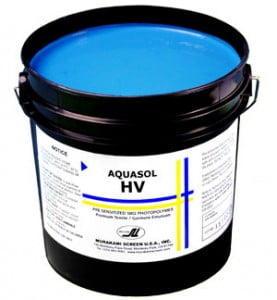
Aquasol HV

Aquasol HV

Regular price $75.55
Regular price Sale price $75.55
Sale Sold out
Shipping calculated at checkout.
Size

Description

Murakami Aquasol HV is a premium blue PVA-SBQ pure photopolymer emulsion designed for high-resolution textile screen printing. Built for use with plastisol inks and water-based inks when properly hardened, Aquasol HV delivers excellent stencil durability, sharp image definition, and consistent performance for garment printing applications.

With a high 46% solids content, Aquasol HV coats smoothly and builds stencil thickness easily, making it a strong choice for printers who need dependable edge definition and controlled ink deposit. Its wide exposure latitude makes screen exposure more forgiving, while its fast exposure speed helps improve screen room efficiency.

Compared to traditional diazo-sensitized emulsions, Aquasol HV exposes 3–5 times faster, helping shops reduce production time without sacrificing resolution or durability. For water-based textile printing, use with Murakami hardener and diazo sensitizer for improved stencil resistance.

Features

  • Blue PVA-SBQ pure photopolymer emulsion
  • Designed for textile screen printing
  • Excellent for plastisol ink printing
  • Suitable for water-based inks when hardened with Murakami hardener and diazo sensitizer
  • High 46% solids content for easy coating and stencil build-up
  • Provides outstanding resolution, definition, and edge quality
  • Wide exposure latitude for more forgiving screen exposure
  • Exposes 3–5 times faster than diazo-sensitized emulsions
  • Durable stencil performance for production printing
  • Great for detailed artwork, halftones, and fine-line designs

Best For

Aquasol HV is best for screen printing shops that need a fast-exposing, high-resolution textile emulsion for plastisol printing, with the ability to handle water-based printing when properly hardened.
View full details
  • Need Assistance with Murakami Products?

    Our team is committed to your success and satisfaction. We are passionate about helping the printing community through knowledge, education, and service. Need additional information on our products, contact us today and we will be happy to assist!

Frequently Asked Questions

Where is Blue Ridge Screen Products located?

Blue Ridge Screen Products is located in Charlotte, North Carolina. Our facility includes a showroom, warehouse, equipment demonstration area, and service support for screen printing and digital printing businesses.

Visit our contact page for our address, business hours, and directions.

Does Blue Ridge stock replacement parts and consumables?

Yes. Blue Ridge stocks a wide range of inks, films, powders, emulsions, chemicals, maintenance supplies, and replacement parts for many of the equipment brands we sell.

Browse our screen printing suppliesdigital printing supplies, or contact technical service for help locating a specific part.

Can I pick up my order from Blue Ridge Screen Products?

Yes, local pickup is available for eligible orders from our Charlotte, North Carolina location. Orders should be confirmed as ready before arriving for pickup.

Can I place an order in person at Blue Ridge Screen Products?

Yes. Blue Ridge Screen Products operates a retail store at our Charlotte, North Carolina location. Customers are welcome to visit Monday through Friday from 9:00 a.m. to 4:00 p.m. to browse available products, place an order in person, or pick up an existing order.

For large orders or specific products, we recommend calling before visiting to confirm availability.

What is the difference between Murakami Aquasol HV and Aquasol HVP?

Both are high-viscosity emulsions designed to help printers build stencils. Aquasol HVP has a transparent pink appearance, which can make it easier to see through the screen during manual registration. Aquasol HV has a blue appearance and building thicker stencils with less passes.

The best choice depends on your preferred emulsion color, screen-making process, ink system, and stencil thickness. Review our available Murakami emulsions for current options.

How many coats of emulsion should I apply?

The correct coating method depends on mesh count, emulsion solids, scoop coater edge, artwork, ink deposit, and desired stencil thickness. A common starting point is one or two coats on the print side followed by one or two coats on the squeegee side.

High-density and specialty printing may require additional coats. Record your coating method and use the same process consistently so exposure results remain repeatable.

What is the difference between Murakami and KIWO emulsions?

Murakami and KIWO both offer professional emulsions for different inks, exposure systems, screen room conditions, and stencil requirements. The better brand or product depends on how your shop prints rather than one brand being universally better.

Blue Ridge carries multiple options from both manufacturers so shops can match emulsion characteristics to their production needs. Browse the emulsion collection or ask our team for help comparing products.

Which emulsion should I use with water-based or discharge ink?

Water-based and discharge inks require an emulsion with strong water resistance. Not every plastisol emulsion is designed to withstand long runs with water-based products.

Look for an emulsion specifically rated for water-based or discharge printing. For demanding applications, an emulsion additive or hardener may improve stencil durability, although hardening can make reclaiming more difficult.

Which emulsion should I use with plastisol ink?

Many pure photopolymer and dual-cure emulsions are suitable for plastisol printing. Your choice should also account for exposure speed, screen room conditions, mesh count, required stencil thickness, and expected print run.

Browse our KIWO and Murakami emulsions, or contact our screen room experts for a specific recommendation.

What are the main types of screen printing emulsion?

Common emulsion types include pure photopolymer, dual-cure, and diazo emulsions.

Pure photopolymer emulsions are generally fast exposing and arrive ready to use. Dual-cure and diazo emulsions use a sensitizer and are often selected for their durability, exposure latitude, or resistance to specific ink systems.

The right choice depends on your ink, exposure equipment, mesh count, stencil thickness, reclaim process, and production requirements.

What is screen printing emulsion?

Screen printing emulsion is a light-sensitive coating applied to screen mesh. Once dry, the coated screen is exposed to ultraviolet light through a film positive. The areas blocked by the artwork remain water-soluble and wash away, creating the open stencil through which ink is printed.

Shop our complete selection of screen printing emulsions.

How do I determine the correct exposure time?

Use an exposure calculator or step-wedge test with your actual emulsion, mesh, coating method, film positive, and exposure unit. Manufacturer estimates are useful starting points, but they cannot account for every screen room and exposure setup.

Use the free Blue Ridge Exposure Calculator to evaluate your stencil and identify signs of underexposure, overexposure, or correct exposure.

How can I track my order?

Once your order ships, you will receive a shipping confirmation email containing your tracking number and a link to view the latest delivery updates from the carrier.

Tracking information may take up to 24 hours to update after the carrier receives the shipment. Large equipment and freight orders may use a separate freight carrier and may require additional delivery coordination.

If you have not received tracking information or need help locating your shipment, contact our customer service teamwith your order number.